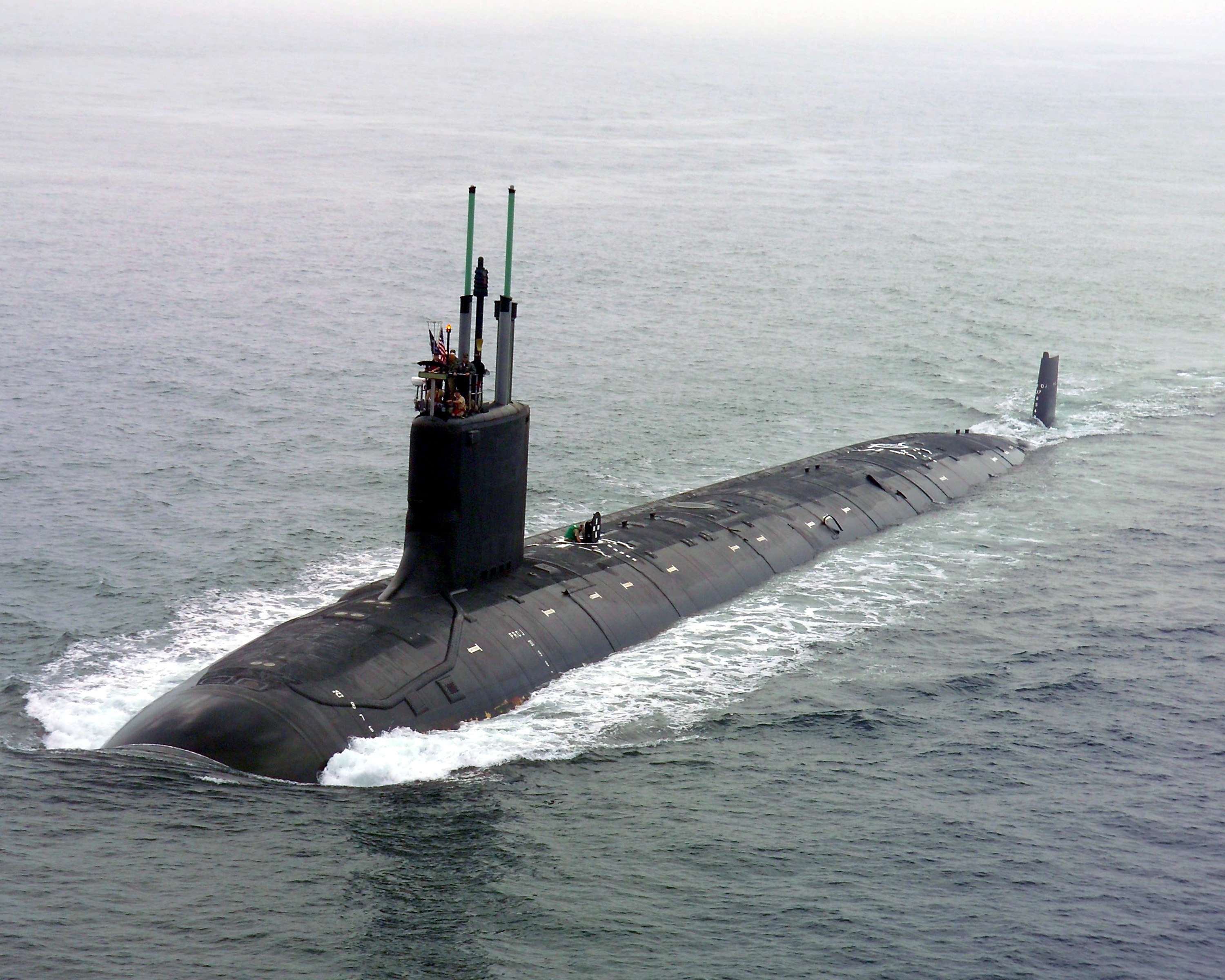
For nearly half a century, the Los Angeles-class attack submarine has been the U.S. Navy’s dependable underwater workhorse, the kind of platform that kept showing up long after newer designs were supposed to take over.

That longevity is exactly why its retirement has become such a consequential engineering story. The class once numbered 62 boats, and even now 23 remain in commission, still accounting for a large share of the Navy’s fast-attack fleet. Built across three flights, with the later 688i boats gaining quieter operation, better sensors, and under-ice capability, these submarines were designed for the Cold War but proved adaptable enough to remain relevant deep into the 2020s. Their design emphasized speed, stealth, and endurance, and the result was a class that could escort carrier groups, hunt submarines, launch Tomahawks, collect intelligence, and absorb repeated upgrades over decades of service.
But service life in nuclear submarines is not just about hull strength or combat usefulness. It is governed by reactor life, overhaul economics, and how much modern hardware an older platform can realistically absorb before upgrades begin to cost more than replacement.
That is where the Los Angeles class runs into hard limits. Most of these boats were built around reactor cores intended for roughly 35 to 40 years of service, and while refueling is possible, it demands shipyard time, specialized labor, and money that the Navy is increasingly directing toward newer submarines. Several boats have already moved out of frontline service, and hulls such as Newport News, Alexandria, and Scranton have been identified as part of the current retirement wave. The question is no longer whether the class remains dangerous. It is whether maintaining aging boats makes sense when the undersea environment is becoming harder to survive in and more expensive to dominate.
The replacement is not simply newer for the sake of newer. The Virginia class was built around different assumptions about sensing, processing, and payload flexibility. It uses photonics masts instead of a traditional periscope, a pump-jet propulsor for quieter movement, and an open-architecture sonar approach that allows faster updates as software and hardware improve. Later boats also add the Virginia Payload Module, which sharply expands missile capacity, and the class is built for missions ranging from intelligence gathering to anti-submarine warfare in crowded littoral waters. Open-source program data puts a current boat with VPM at about $4.3 billion per unit, a reminder that the Navy is trading quantity pressure for capability growth.
That trade is uncomfortable because the force is already tight. The Navy’s fast-attack inventory sits well below its stated goal, with broader fleet reporting placing it at 53 fast-attack submarines against a requirement of 66. At the same time, production has lagged. Only two U.S. shipyards build nuclear submarines, and both are working through construction delays, maintenance backlogs, workforce strain, and supply-chain limits. As a result, retiring Los Angeles boats on schedule can open a near-term capacity gap even when the long-term logic is sound.
The engineering dilemma is clear enough: keep aging submarines longer and spend heavily to preserve shrinking returns, or retire them and accept a thinner fleet while industry catches up. The Los Angeles class still represents one of the most successful submarine designs the Navy ever fielded. It is disappearing not because it stopped mattering, but because the technical and industrial burden of keeping it alive has finally started to outweigh the advantages that made it indispensable.