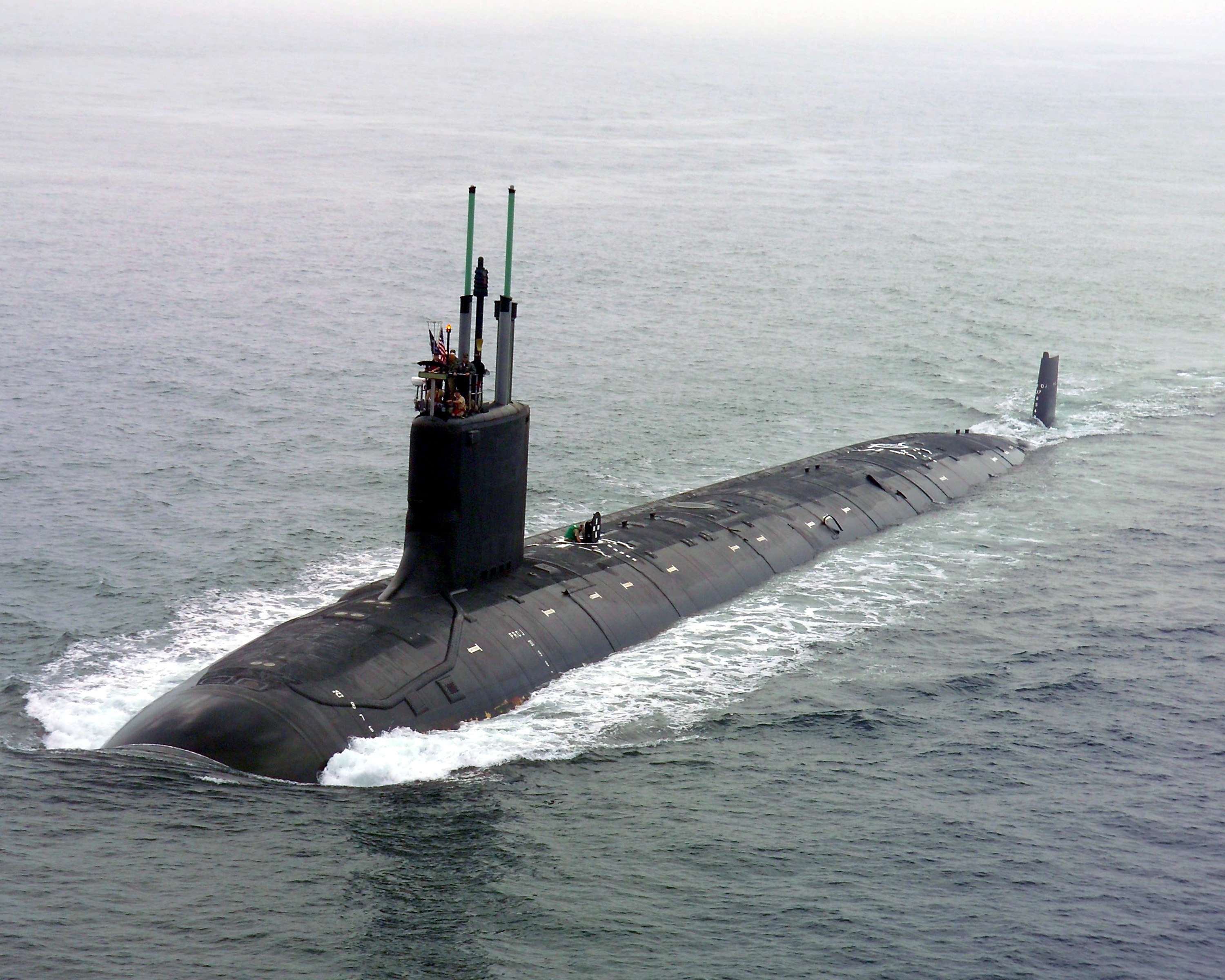
What changes when a 377-foot nuclear-powered attack submarine joins the fleet? In the U.S. Navy’s case, it reinforces a part of naval power that is measured less by visibility than by persistence, stealth, and the ability to bring sensors and weapons into contested waters without warning.

The newly commissioned USS Massachusetts, designated SSN-798, enters service as the 25th Virginia-class boat, a class the Navy has positioned as the long-term replacement for aging Los Angeles-class attack submarines. Built by General Dynamics Electric Boat and HII’s Newport News Shipbuilding, the submarine belongs to the Block IV group, a version intended to spend more time deployed by reducing maintenance demands over its service life. That matters because attack submarines are not single-purpose platforms. According to the Navy’s official SSN fact file, they are expected to hunt submarines and surface ships, support intelligence and surveillance missions, project power ashore with cruise missiles, assist special operations forces, and contribute to mine warfare.
Massachusetts carries the familiar Virginia-class dimensions: roughly 377 feet in length, a submerged displacement of about 7,800 tons, a nuclear propulsion plant, and an underwater speed listed at 25+ knots. Those figures do not make it the Navy’s fastest attack submarine. The Seawolf class is still widely regarded as the speed benchmark, with public reporting often placing it near 35 knots underwater. But speed alone is not the reason Virginia-class boats have become the backbone of the force. Their value comes from balance: enough stealth and endurance for high-end undersea operations, enough payload for strike missions, and enough design flexibility to keep absorbing new sensors, software, and mission systems over decades of service. That design flexibility is one of the class’s defining engineering choices.
The Navy’s fact sheet notes that Virginia-class submarines replaced traditional optical periscopes with two photonics masts carrying visible and infrared digital cameras. Moving away from a classic periscope arrangement helped free the control room from older layout constraints inside the pressure hull. The class was also built around modular construction and open architecture, an approach intended to speed upgrades and avoid locking the boats into one generation of combat systems. Industry descriptions of the Virginia combat system highlight how sensor fusion, tactical picture generation, payload control, and launch management increasingly depend on software-defined integration rather than isolated hardware chains.
That helps explain why Block IV remains important even as attention shifts to newer Block V submarines. Massachusetts does not have the Virginia Payload Module, the 84-foot hull insert that will dramatically expand missile capacity on later boats. Even so, Block IV boats occupy a critical middle ground: they are modern enough to carry the Navy’s current undersea mission load, but optimized for availability at a time when fleet planners are trying to sustain presence while older submarines retire and newer variants arrive more slowly than originally planned.
At commissioning, Executive Officer Cmdr. Joshua Hightower described the submarine in simple operational terms: “Today, USS Massachusetts is tested and battle-ready.” That line captures the larger significance. For the Navy, another Virginia-class submarine is not just another hull in the water. It is another quiet node in a wider undersea network of surveillance, strike, and deterrence that remains central to how maritime power is sustained below the surface.