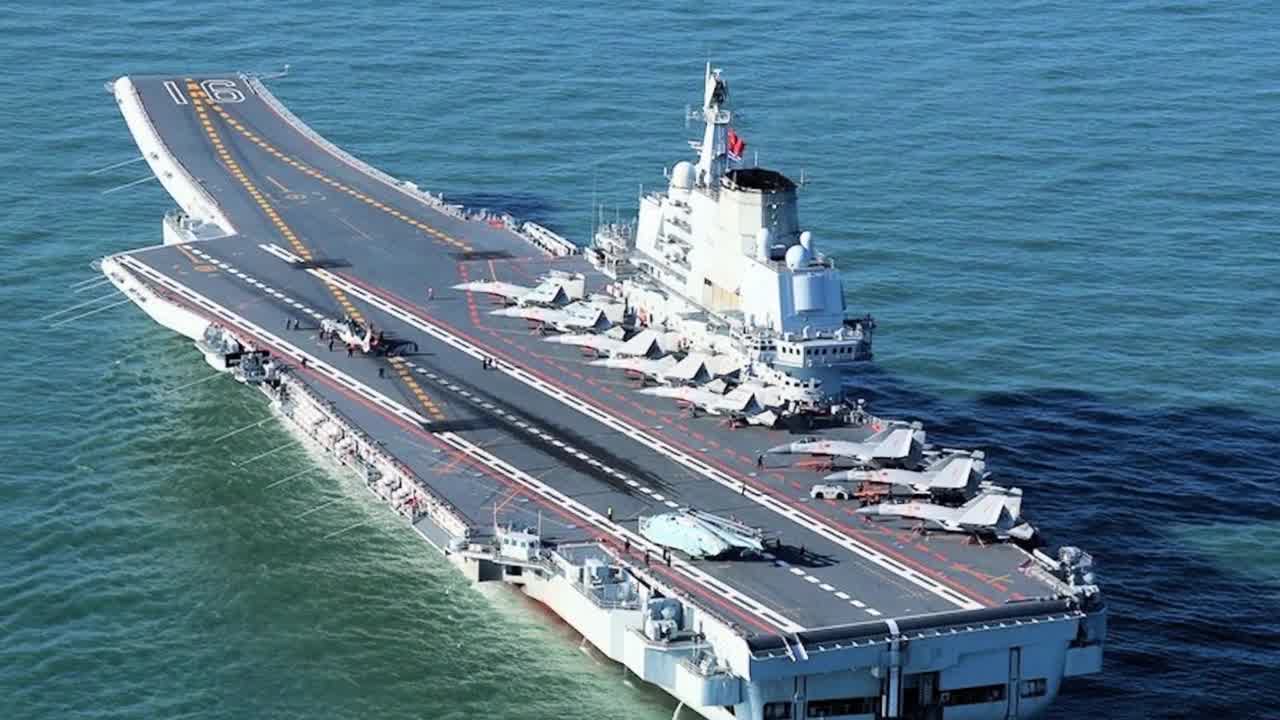
“The question is whether it will be enough.” In the current debate over Pacific naval power, that line captures the issue more accurately than any fleet-size headline. China’s navy is larger by hull count, but counting ships has become a shortcut that obscures the engineering and operational problem underneath. The more consequential shift is the way Beijing has built naval mass into a broader anti-access system designed to slow intervention, complicate maneuver, and push U.S. forces farther from the fight. In that framework, warships are only one layer. Sensors, long-range missiles, targeting networks, and shore-based support all matter because they can delay effective combat power at the moment when timing shapes outcomes.

The raw numbers are real. One recent assessment counted 234 Chinese warships to 219 U.S. Navy warships under a like-for-like standard, while also noting that American headline totals often include many more support vessels. Even so, displacement still favors the United States, largely because the U.S. fleet fields far larger carriers, amphibious ships, and nuclear submarines. That contrast explains why hull count alone cannot settle the question. A navy built around big-deck aviation, undersea reach, and long endurance solves a different problem than a fleet concentrated near home waters and backed by land-based missile power. That is where the balance has shifted.
China’s advantage is increasingly industrial as much as naval. According to a 2025 review, China claims more than half of the world’s commercial shipbuilding market, while U.S. commercial output has shrunk to a marginal share. Another CSIS analysis cited an unclassified Navy slide indicating roughly 230 times the shipbuilding capacity of the United States. That does not automatically make Chinese warships superior, but it changes the long game. A fleet that can be expanded, repaired, and modernized faster carries strategic weight even before combat begins. It also helps explain why so many Chinese surface combatants are newer, with about 70 percent launched after 2010.
The American response has been to disperse forces, rely more heavily on submarines and long-range strike, and make targeting harder through distributed maritime operations. On paper, that is a rational answer to dense surveillance and missile threats. In practice, the concept rises or falls on sustainment. Fuel, reloads, maintenance, escorts for logistics ships, and resilient command-and-control determine whether distributed forces remain combat-capable or become isolated targets. A 2025 study on naval sustainment warned that forward rearming of vertical launch cells remains an early-stage capability even though high-end combat would burn through missile inventories quickly.
There is still one area where the United States holds an unmistakable edge: submarines. CSIS noted 66 U.S. nuclear submarines versus 12 for China, a gap that matters because nuclear boats combine stealth, endurance, and strike volume in ways that are hard to match. But even that advantage depends on industrial depth, maintenance capacity, and munitions supply.
So the real danger is not that China has built a larger navy. It is that Beijing has assembled a maritime system able to make U.S. power arrive later, shoot less often, and stay on station for less time. If that happens, the opening phase of any Pacific crisis would be shaped not by who has more ships on paper, but by who can keep sensors working, magazines filled, and forces in the fight.