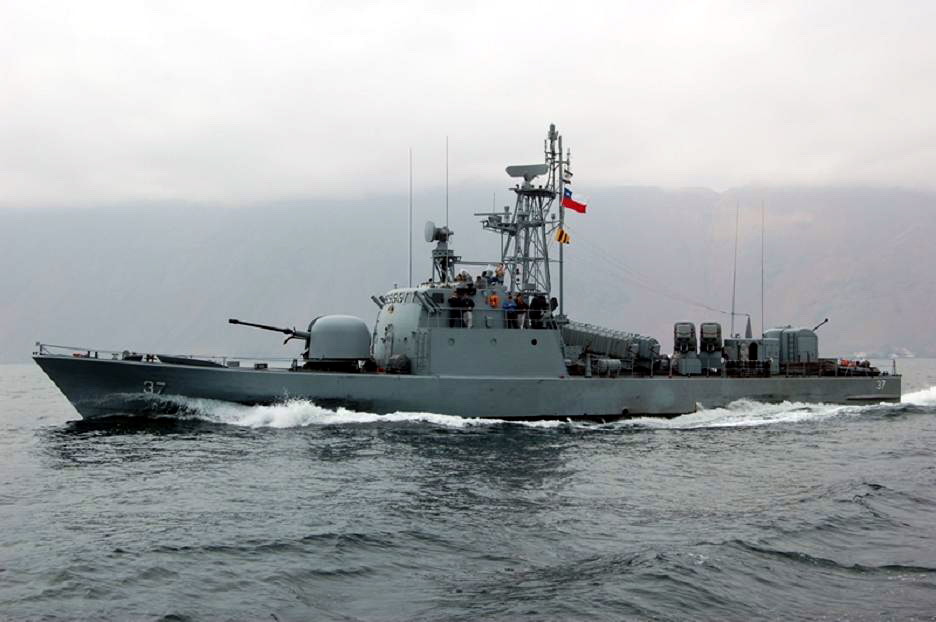
What happens when a navy pours too much combat power into a single hull? In the missile age, that question sits at the center of fleet design, because a ship that concentrates sensors, launch cells, command functions, and crew in one place can also concentrate risk.

Modern naval thinking has moved steadily toward dispersion for a simple reason: anti-ship missiles have become faster, smarter, and harder to defeat. Weapons that skim the sea, use multiple guidance methods, and arrive in coordinated salvos compress reaction time and strain defensive systems. Even large warships with layered defenses can be pushed toward saturation when many incoming threats arrive from different bearings. The technical problem is no longer only how to build a tougher ship. It is how to avoid creating a target so valuable that an opponent can gain an outsized advantage from a single successful strike.
That logic helps explain the growing interest in distributed fleets made up of smaller combatants, missile craft, and unmanned vessels. The U.S. Navy’s own concept of “dispersing the fleet while concentrating effects” captures the shift. Rather than keeping firepower packed into a few major platforms, distributed maritime operations aim to spread sensors, shooters, and command functions across wider spaces while still networking them into one fight. A dispersed formation is harder to find, harder to track, and harder to overwhelm in a single blow. It also creates more angles for offense, since multiple ships can contribute missiles or sensor data without sailing in one tight cluster.
Small ships matter here not because they replace every large combatant, but because they are risk-worthy in ways giant warships are not. The historical model often cited is the World War II landing craft support ship, or LCS(L), a compact combatant that carried heavy weapons for its size and operated close to danger. According to U.S. Naval Institute analysis, 130 LCS(L)s were built in nine months, showing what numbers can do when design and construction are simplified. Those vessels were not luxurious, and they were not meant to absorb endless punishment. They existed to add fires, rescue crews, screen larger ships, and accept missions that would be disproportionate for a capital ship.
That principle now fits unmanned and lightly manned missile ships especially well. A smaller vessel can serve as a forward sensor, a decoy, a close-in defender, or a launcher for containerized missiles. It can be positioned farther out to expand radar coverage against sea-skimming threats, and if linked by datalinks, it can feed targeting information back to larger ships. The article on future medium unmanned surface vessels points to the 2021 SM-6 test from Ranger as proof that even unmanned platforms can contribute to air defense. Add guns, decoys, and recovery gear, and the small ship becomes more than a missile truck. It becomes an expendable layer in a wider defensive web.
There is also an industrial argument. Building many smaller hulls can pull commercial yards into naval production, broaden the shipbuilding base, and reduce the strategic shock of losing any one vessel. By contrast, a navy built around a handful of giant, irreplaceable ships faces a different kind of vulnerability: not just enemy missiles, but slow replacement cycles, strained maintenance schedules, and magazine depletion. Analysts examining distributed operations have warned that precision munitions stockpiles and reload capacity can become limiting factors long before theory meets practice.
The result is not the end of the large warship. Big ships still bring endurance, command facilities, aviation support, and deep magazines that smaller craft cannot match. But the design trend is increasingly clear: navies want more hulls, more nodes, and more ways to keep fighting after the first exchange. In an era shaped by long-range missiles and dense sensing networks, spreading combat power across many smaller ships is less about fashion than about survival.