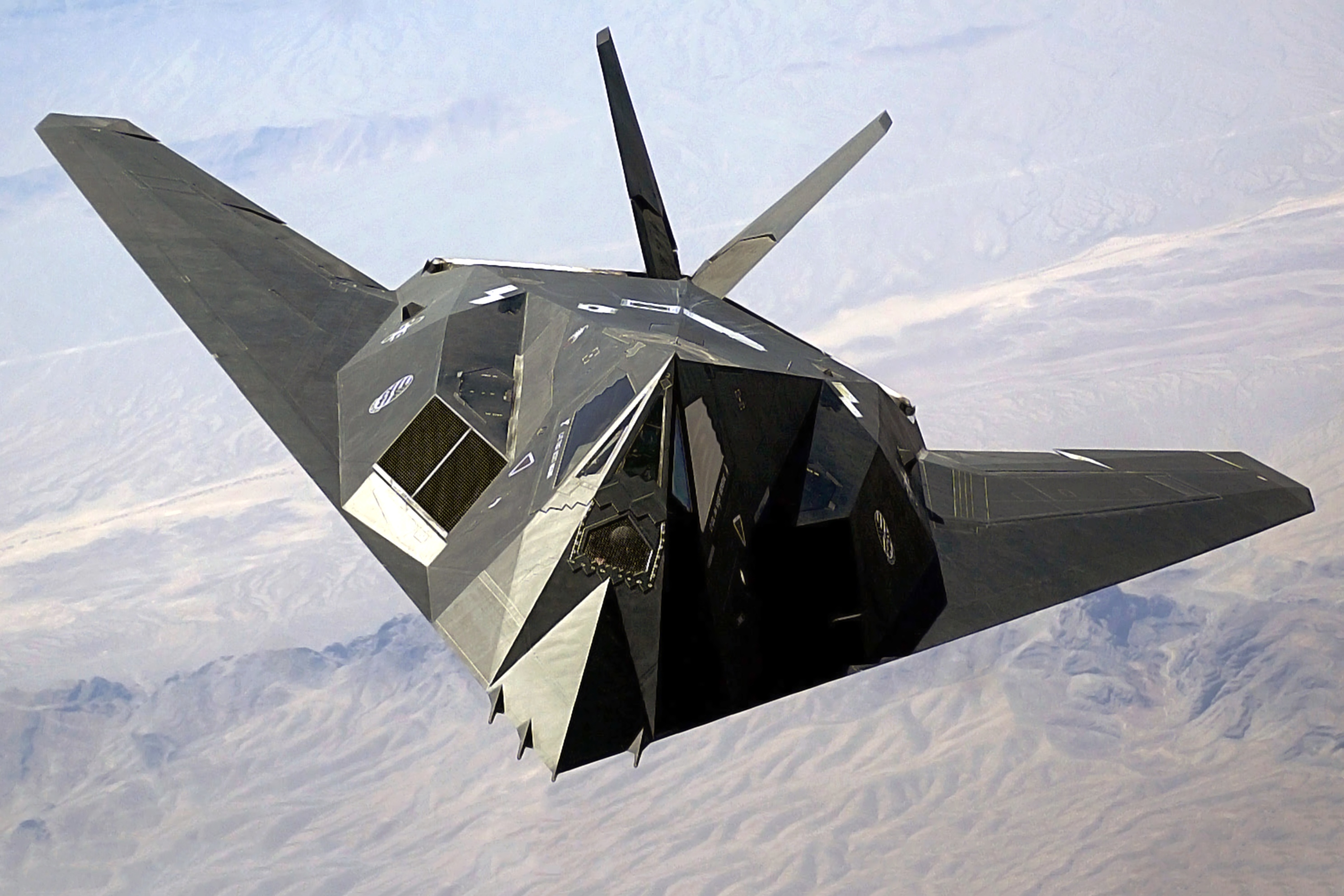
Why is a jet retired in 2008 still showing up as the stealth threat U.S. pilots need to face?

The answer says as much about modern air combat as it does about the F-117 itself. The Nighthawk was built for a different era, with faceted surfaces, strict secrecy, and a mission centered on slipping through dense air defenses to strike valuable targets. Yet that same aircraft still offers something difficult to replace in training: a real low-observable jet that can force F-22 and F-35 crews to work their sensors, tactics, and communications against a hard-to-track target.
The F-117’s second career has moved well beyond nostalgia. The Air Force has kept the aircraft active around Tonopah and the Nevada test ranges, using it in test and training roles instead of front-line strike work. That fits with a broader need for more realistic threat-representative exercises, especially as U.S. aircrews prepare for encounters with advanced Chinese and Russian stealth designs. The Nighthawk does not fly like a J-20 or a Su-57, and it was never a dogfighter with its Mach 0.8 top speed. What it does replicate is the more important part of the problem: the challenge of finding, tracking, and coordinating against a stealthy aircraft in a cluttered battlespace.
That makes the old jet useful in a very current way.
The aircraft’s original design explains why it still matters. The program emerged from the Cold War drive to crack sophisticated Soviet air defenses, with development beginning in the late 1970s and the jet entering operational service in the early 1980s. The public did not even know it existed until November 1988. Its purpose was direct and specialized. As one historical description put it, “Its small radar signature, Low Observable (LO Stealth) technologies, and advanced targeting system allowed the aircraft to penetrate dense threat environments and deliver precision weapons against heavily defended, high-value targets with pinpoint accuracy.” That basic formula still has training value because modern air warfare is increasingly about sensor competition, emission control, and decision speed, not just raw maneuverability.
Its continued flying status also appears more deliberate than symbolic. The Air Force contracted to keep the type available for test and training support through at least 2034, while roughly 45 aircraft have remained flyable or regeneratable rather than being scrapped outright. Reports of Nighthawks operating alongside aggressor units and in large-force exercises underline that the jet has become part of a broader training ecosystem rather than a museum piece that occasionally leaves storage.
There are also clues that the mission set is widening. The F-117 has been associated with research, development, test, and evaluation work, and its low-observable shape makes it a practical platform for experimenting with coatings, mission systems, and communications in realistic range environments. Another sign of long-term utility emerged when F-117s were photographed refueling from a KC-46 Pegasus in 2025, linking the aircraft to the Air Force’s newest tanker and extending how flexibly it can be used in testing and training profiles.
The Nighthawk no longer represents the leading edge of stealth design. It still represents something just as important: a rare, operationally proven platform that can make advanced fighter crews confront the hardest part of the air war before they ever see it coming.