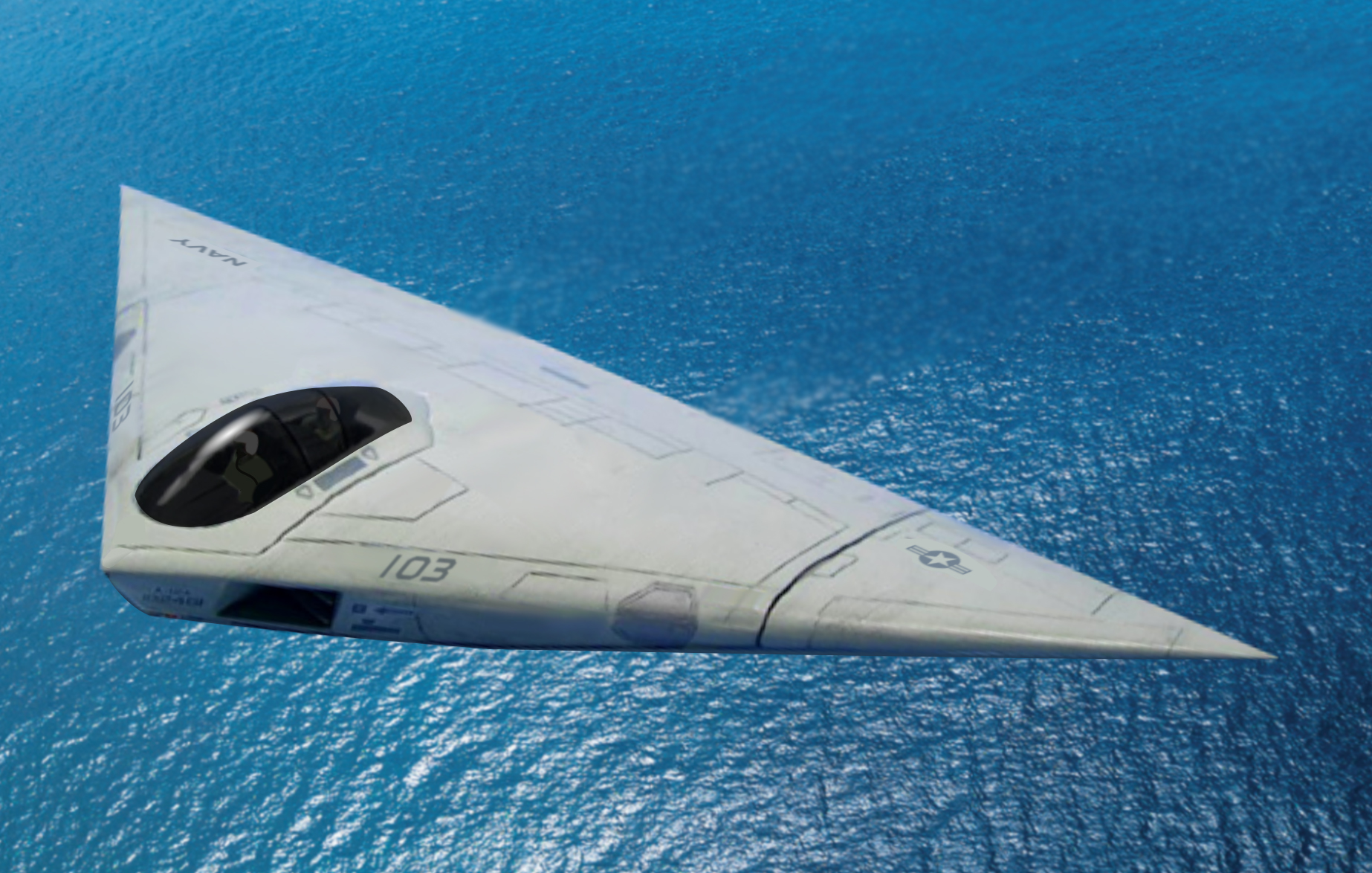
The A-12 Avenger II still matters because it was not just another canceled airplane. It was the Navy’s attempt to put a true stealth strike aircraft on a carrier deck years before low-observable design became routine across U.S. tactical aviation, and its collapse still shadows every discussion about what a future carrier-based strike platform should be.

Nicknamed the “Flying Dorito” for its sharply triangular flying-wing form, the A-12 emerged from the Navy’s Advanced Tactical Aircraft program begun in 1983 as a replacement for the aging A-6 Intruder. The goal was unusually ambitious for its time: an all-weather, carrier-based attack jet with stealth shaping, internal weapons carriage, and the reach to hit defended targets without relying on the brute-force tactics of an earlier era. On paper, it looked like a major leap. The Navy at one point envisioned a very large fleet, with plans that stretched across carriers and even sparked outside interest beyond naval aviation.
That promise ran into the hardest part of naval aircraft design: making advanced technology survive the unforgiving physics of carrier operations.
The A-12’s compact, tailless layout was supposed to hide weapons internally while preserving deck-handling practicality. It was designed around two engines and an internal payload of 5,160 pounds, with room for a mix of guided weapons and other ordnance inside the fuselage rather than slung under the wings. Its projected performance figures were notable for a carrier aircraft of the period, including an 800-nautical-mile combat range. That combination explains why the aircraft still draws interest: naval aviation rarely gets both stealth and meaningful strike radius in the same package. The A-12 aimed to deliver exactly that, while also fitting into the cyclic tempo of catapult launches, arrested recoveries, corrosive salt air, and cramped shipboard maintenance. Designing any stealth aircraft is difficult. Designing one to endure carrier life is another level entirely.
By 1990, the program was buckling under its own demands. Weight growth became the defining technical problem, with the aircraft reported to be up to 30% over specification as requirement changes and composite design challenges piled up. For a carrier aircraft, excess weight is not a bookkeeping issue; it directly affects launch margins, recovery loads, bring-back capability, and structural stress. Costs surged with it. One estimate cited in period accounts suggested the A-12 could consume up to 70% of the Navy’s aircraft budget, an extraordinary burden for a single program.
The program ended on 7 January 1991, canceled for breach of contract after delays and overruns had become impossible to ignore. What followed was years of litigation, finally ending in 2014 with a settlement that closed one of the longest-running industrial disputes in modern U.S. military aviation.
Even in failure, the A-12 left fingerprints on what came next. The Navy turned first to other attack-aircraft studies, then ultimately to the Super Hornet as the practical backbone of carrier air wings. The unrealized A-12 also foreshadowed later efforts to regain deeper-range striking power at sea, whether through stealthy unmanned concepts or the still-discussed next-generation F/A-XX. A full-size mockup survived long enough to become a museum artifact, a reminder that some aircraft programs are important not because they flew, but because they revealed exactly where ambition, budget, and engineering stopped agreeing.