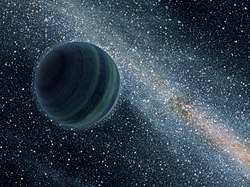
what if a planet did not need a star at all? This is the provocative question at the heart of an emerging astronomical debate, wherein the discovery of rogue planets-worlds free-floating in the galaxy-appears to challenge definitions of planethood previously unquestioned. The 2006 criteria put out by the International Astronomical Union-that a planet must orbit the Sun, be of sufficient mass to have formed a spherical shape, and have cleared its orbital zone-can classify bodies neatly within our Solar System. Yet rogue planets, unbound to any star, fall outside those boundaries, forcing scientists to fundamentally revise the concept altogether.

Rogue planets form via two distinct paths. The first ones form within stellar systems by condensing from a protoplanetary disk, just like Jupiter and Earth, but get ejected because of gravitational interaction. Others form through the direct collapse of interstellar gas clouds via the same mechanism which promotes star formation, but it never reaches high enough core mass to ignite hydrogen fusion. This latter path does share a boundary with the formation of brown dwarfs, objects with masses in the range 13-93 M J that can burn deuterium briefly. “Our observations confirm that nature produces planetary mass objects in at least two different ways from the contraction of a cloud of gas and dust, the way stars form, and in disks of gas and dust around young stars.” said astrophysicist Ray Jayawardhana.
Detection of these elusive worlds calls for techniques beyond conventional searches for exoplanets. For young rogue planets, infrared astronomy proves rather effective because those objects still radiate residual heat from their formation. Recently, the James Webb Space Telescope identified six such planets in NGC 1333, each five to ten times the mass of Jupiter. One even hosts a dusty disk-in the process of forming moons-with silicate grains that hint at miniature planetary systems independent of any star. Complementary to these findings are the ground-based facilities such as the ESO VLT X-shooter, which has captured dramatic accretion bursts-such as the 6 billion kilograms per second infall onto Cha 1107-7626 this past August 2025-altering disk chemistry through water vapor and hydrocarbons and revealing magnetic-field-driven inflows previously seen only in stars.
Another strong method of detection comes through gravitational microlensing. Predicted by Einstein’s General Theory of Relativity, microlensing is a phenomenon in which a massive foreground object bends light of a background star briefly, thereby amplifying its brightness. With this method, low-mass rogue planets, including those as small as Mars, can be uniquely found since this is not dependent on an object being luminous itself. High-cadence CCD mosaic cameras in surveys such as OGLE, MOA, and KMTNet have been continually refining the sensitivity of microlensing for events such as OGLE-2016-BLG-1928, a record-setting event with a timescale of just six hours, consistent with an Earth-mass rogue planet. The event had a detectable finite-source effect, which allowed the measurement of its angular Einstein radius and set it among the very lowest-mass free-floating planet candidates found up to this date.
The problem from a technical standpoint with microlensing is its rarity and brevity-the alignments must be accurate, and sometimes the signal disappears in hours. Modeling has become increasingly sophisticated with an impact factor, Einstein crossing time, and limb-darkening as parameters that describe microlensing events. Degeneracy in interpretation of light curves-such as close-wide separations-is an important part of the theory of microlensing and requires careful resolution via multiobservatory coverage and increasingly space-based platforms.
The future Nancy Grace Roman Space Telescope will take rogue planet studies to an entirely new dimension. With its 2.4-meter mirror and wide-field infrared sensors, Roman will constantly be surveying the Galactic bulge and identifying hundreds of rogue planets down to Mars mass. Its microlensing survey will have an at least tenfold improvement in census accuracy, refining the “free-floating mass function” and distinguishing between ejected planets and star-like formations. Being in space above the atmosphere means Roman is able to make continuous observations over several months, capturing transient events that sometimes flash by too fast for ground-based telescopes to catch. As Matthew Penny emphasizes, “Roman is a game-changer for rogue planet searches.”
These findings blur the boundaries between planets, brown dwarfs, and stars. JWST’s detection limits in NGC 1333 suggest a lower mass threshold-more like five Jupiter masses-for direct cloud collapse, while microlensing reveals a potentially vast population of smaller ejected worlds. Estimates now put rogue planets may outnumber stars by a factor of 20, with trillions wandering the Milky Way. Dr. Belinda Damian summarizes the paradigm shift: “The building blocks for forming planets can be found even around objects that are barely larger than Jupiter and drifting alone in space.” For space science enthusiasts, this is not simply a cataloging exercise; this is the rewriting of the planetary science map, broadening the definition of what a planet can be.