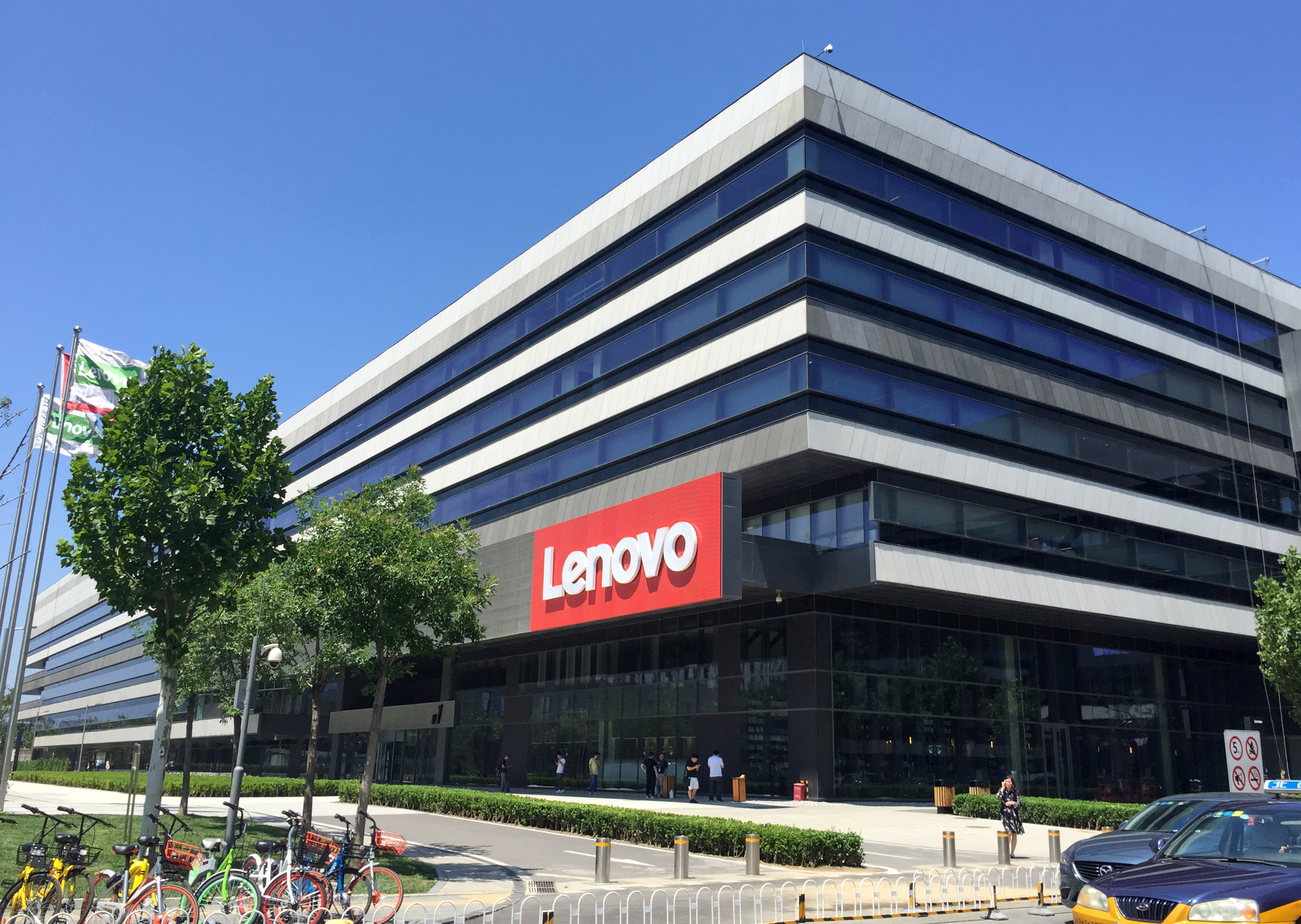
Who said the real race in autonomous driving was about who could build the sleekest car? The real competition is now in silicon and software where high-performance microcontrollers and AI-driven architectures are redefining what vehicles can do. The latest collaboration between Infineon Technologies AG and Lenovo Group Ltd is a case study in how hardware precision and intelligent software converge to power the next generation of software-defined vehicles (SDVs).

At the heart of this partnership is the integration of Infineon’s AURIX™ microcontroller family into Lenovo’s flagship AD1 and AH1 domain controllers. These domain controllers function as centralized high-performance computing hubs, replacing the traditional distributed network of electronic control units (ECUs) with a scalable architecture capable of running multiple workloads simultaneously. The AURIX microcontroller is engineered for safety-critical applications, offering lockstep cores, hardware security modules, and deterministic real-time performance attributes essential for advanced driver assistance systems (ADAS) and autonomous driving functions. Thomas Böhm, Infineon’s Senior Vice President for Automotive Microcontrollers, emphasized, “As the world number one in automotive microcontrollers, the AURIX product family of Infineon plays a crucial role in enabling safe and secured computing in the era of software-defined vehicles.”
This hardware foundation is designed to support AI workloads that are increasingly central to modern mobility solutions. In SDVs, AI is not a peripheral feature it is the operational core. AI algorithms in ADAS process sensor fusion data from lidar, radar, and cameras in real time, enabling lane-keeping assistance, adaptive cruise control, and collision avoidance. Lenovo’s domain controllers, powered by AURIX, provide the computational throughput and low-latency data pathways required for these safety-critical functions, while maintaining superior energy efficiency to meet stringent automotive power budgets.
The collaboration is also a strategic move to align with the industry’s shift toward centralized architectures and over-the-air (OTA) update capabilities. In SDVs, OTA updates allow OEMs to deploy new features, enhance performance, and patch vulnerabilities without physical service interventions. This capability depends on robust, secure computing platforms precisely the environment AURIX and Lenovo’s domain controllers are built to provide. By combining scalable software architectures with hardware designed for deterministic safety, OEMs can accelerate their SDV strategies while ensuring compliance with evolving regulatory frameworks.
Considering the case as a whole, the partnership is a great example of how the technology of self, driving cars can be combined with the support stack of the full vehicle. Modern communication networks inside the car, for instance, automotive Ethernet, allow very quick data exchange between sensors, controllers, and actuators. Lenovo’s AD1 and AH1 use these networks to serve vehicle, to, everything (V2X) communication, thus cars can communicate with the traffic infrastructure, other vehicles, and devices used by pedestrians. This connection is a fundamental thing for smart city integration, from which controlled traffic flow can lead to less congestion and emissions.
The AI integration strategy here reflects broader industry trends identified in recent surveys, where Phase 1 deployments focus on ADAS and autonomous navigation before expanding into predictive maintenance, personalized in-cabin experiences, and organizational AI processes. Lenovo’s Vice President Donny Tang captured this trajectory, stating, “We are committed to deepening the integration of AI with real-world driving scenarios, jointly creating more dependable experiences for our customers.” This means that the same computing platform enabling adaptive cruise control today could, in a few years, be orchestrating predictive diagnostics or tailoring the cabin environment to individual driver preferences.
The implications for OEMs are significant. Using AURIX, enabled domain controllers, manufacturers can be able to support autonomy levels ranging from L2 partial automation to L4 high automation in a single scalable hardware, software framework. This, in turn, lessens the complication and expense of platform upgrades and, at the same time, opens the way for the integration of emerging AI capabilities. Besides, the ecosystem approach of the collaboration that is the mode of working with system integration, partners in services, software, and toolsfacilitates the platforms not being the isolated technologies but the components of a common mobility infrastructure.
In a competitive environment, such vertically integrated solutions can be used as a layer of protection against the danger of too much dependence on hyperscalers for AI capabilities. By the direct embedding of AI, ready microcontrollers into vehicle platforms, OEMs are allowed to keep strategic control of the main functionalities and differentiate by means of proprietary software innovations. This is in line with the industry’s call to create the maximum local value and not to outsource the critical layers of technology.
The Infineon, Lenovo partnership, in the end, is an initiative that goes beyond a mere supplier agreement. It is a map showing how high, performance computing, AI, and safety, critical engineering can be harmonized to produce commercially viable autonomous driving platforms. In a time when the speed of AI adoption is not the same and is even dramatically different in various regions, such collaborations put OEMs in a position to make a big jump over the slow incremental deployments and thus be able to deliver the fully integrated, connected, and intelligent mobility solutions.