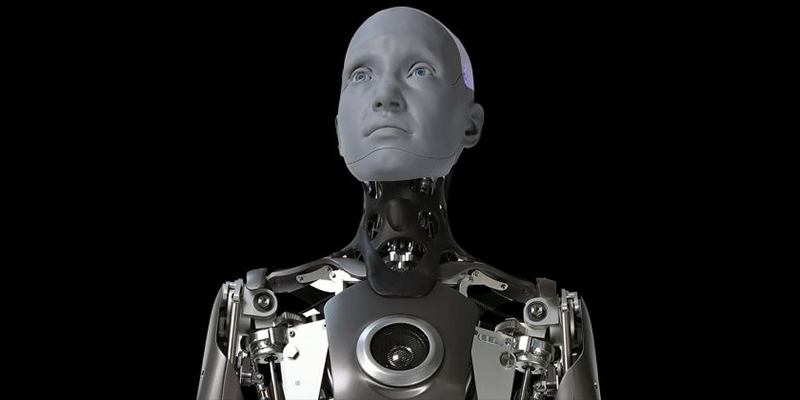
It is not often that a humanoid robot is priced below a mid-range laptop computer, but China’s latest $1,400 Bumi has bucked this trend shaking up the global robotics industry in the process by setting a new price floor for bipedal androids. Created by Songyan Power and due out in January 2026, Bumi is a low-weight, consumer-grade humanoid designed for walking, ‘running’, dancing, voice-control, and drag-and-drop programming. Its first application is 1,000 units sold to Huichen Technology and is designed for educational and family environments a far cry from current applications in the US.

The cost difference is staggering. Tesla’s manufacturer-designed Optimus would cost $20,000 to $30,000 after scaling, versus $250,000 for the Agility Robotics Digit, designed for warehouse use, because China’s strategy is to use manufacturing to disrupt low-margin markets, and the U.S. is targeting high-margin enterprise applications and autonomous functionality with its highly developed AI stack and focus on safety regulation compliance.
The reasons for China to reach the $1400 price point lie in China’s strong component supply chain for robots. Motion control systems, contributing about 55% to a total robot price, are manufactured within China by companies like Tuopu, Sanhua Intelligent Controls, and Zhaowei for both local and export markets. On the other hand, Chinese companies maintain a vertically integrated industry for component manufacturing, including coreless motors, harmonic drives, and 6D force-torque sensors. This allows for quick advancements and a reduction in costs. Contrastingly, current US manufacturers purchase essential components from Asia.
The actuator design also highlights the technological trade-offs involved in this competition. The majority of low-cost humanoid robots, including Bumi, rely on conventional rotary actuators equipped with harmonic drives, which are small, light, and accurate but withstand only limited loads. US industrial humanoid robots are trending towards the use of linear actuators, especially planetary roller screws, where the force is applied through multiple points of contact. This allows it to remain upright for long periods without power consumption and lift heavy loads. The Optimus Gen-3 robot by Tesla utilizes 14 screws priced at $1,350-$2,700 each.
This is part and parcel of China’s embodied AI initiative, which involves the integration of multiple perception modalities, reasoning, and action capabilities in physical systems. National plans such as “Made in China 2025” and the 14th Five-Year Plan underline the importance of robotics not only in manufacturing, as traditionally has been the case, but also in more general settings. By emphasizing the applications fields of entertainment, education, and light-duty robotics, Chinese companies can rapidly increase hardware manufacturing volume, with immense amounts of data being gathered from their performance in the real-world settings, which can be used to train AI models. This is akin to how low-cost drones and electric vehicles from China flooded the market, paving the way for more advanced models from the West.
The implications do not stop with adoption. Analyst projections forecast that the number of humanoids China could deploy by 2050 is set to be over 302 million, against the potential adoption in the US at 77.7 million. While penetration may remain low at merely 3% for the domestic market in China, large-scale manufacturing for the institutional client base could put China on top once more for hardware ecosystem supremacy. The possible problem that could arise, according to some observers, is that price competition could hurt profits and hold back the innovation curve for high-precision actuators and AI autonomy frameworks.
The issue for US developers, therefore, becomes two-fold: sustaining superiority in complexity and overcoming drawbacks in assembly costs. The end-to-end robotics computing system with 150 TOPS processing power from NVIDIA Corporation provides a solid foundation for AI to US companies; however, without depth in the value chain on native soil, it would be difficult to achieve economies of scale in inexpensive production. Tariff-supported reshoring could be beneficial; however, with high labor costs and insufficient chip production capacity, it appears challenging to undercut the Chinese $1400 benchmark price in the short run.
Bumi’s emergence heralds the end of the humanoid’s life in research facilities or assembly lines, as they are now ready to inhabit study halls and family lounges. It appears that as more-personalized AI gains prominence, the future Washington-Beijing hardware- versus high-performance AI policy may very well determine not only market price trends but also standards in terms of how robots are expected to coexist in human society.