It began with a flash: an X5-class solar flare erupting from the Sun on 11 November 2025, hurling a torrent of high‑energy protons toward Earth at nearly the speed of light. Within minutes, the planet’s upper atmosphere was bombarded, triggering a rare Ground Level Event (GLE) in which solar energetic particles penetrate deep enough to be detected at the surface. For aviation, this was no ordinary space‑weather episode: at 12 kilometres altitude, the radiation dose rate briefly spiked to almost ten times the normal cosmic‑ray background, the highest level recorded in nearly two decades.

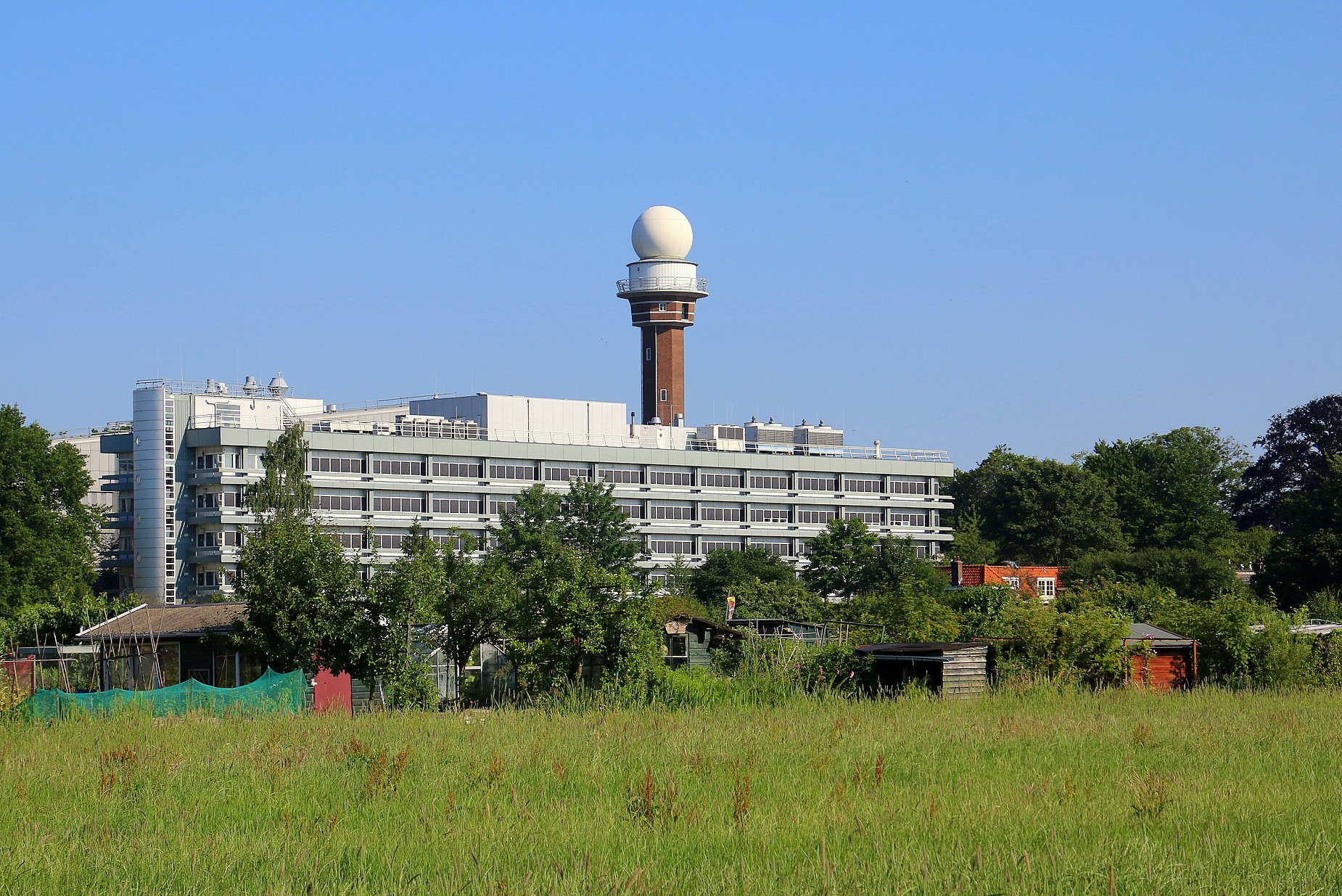
The UK Met Office, working in collaboration with the Royal Netherlands Meteorological Institute, or KNMI, responded within an hour with a fleet of balloon‑mounted radiation probes developed at the University of Surrey’s Space Centre. These sensors rose into the stratosphere, enduring near‑vacuum pressures and temperatures as low as –70 °C while streaming real‑time data from business‑jet and supersonic transport altitudes all the way up to 100,000 ft. “Data from these launches are vital for our understanding of how space weather impacts radiation levels through Earth’s atmosphere,” said Krista Hammond, space weather manager at the Met Office. This was the first operational deployment of the quick‑reaction system and it delivered a three‑dimensional map of radiation changes across UK airspace.
The measurements revealed conditions that could cause about 60 single‑event upsets per hour per gigabyte onboard computer memory. Such bit flips arise when the fast secondary particles-mostly neutrons produced from the primary solar protons-interact with semiconductor structures to flip stored data from a 0 to a 1, or vice versa. “That can cause your electronics to behave in ways you weren’t expecting.” says Matthew Owens, professor of space physics at the University of Reading. On modern fly‑by‑wire aircraft, where flight surfaces are controlled entirely through electronics, such transient faults could have direct implications for handling and safety.
This is not a theoretical risk. Just two weeks before the November GLE, a JetBlue Airbus A320 experienced an uncommanded altitude drop over Florida. Injuries were sustained by some passengers, and investigations suggested the probable cause was a malfunction of the Elac flight‑control computer, due to a high‑energy particle strike. The incident prompted Airbus to publish urgent airworthiness directives and deploy software patches on thousands of A320‑family aircraft. The patch works by rapidly refreshing corrupted parameters prior to their being able to affect control outputs-a mitigation strategy based on the same single‑event‑effect hardness assurance principles as are used in satellite engineering.
Events of this size historically come along only two or three times per solar cycle, but the Sun’s recent behavior suggests it may be entering a more turbulent phase. The November eruption was the strongest GLE since December 2006, but still only about two percent of the intensity of the benchmark 1956 event, when aircraft at altitude could have received over 100 times the normal radiation dose. Analyses of tree rings and ice cores reveal that so-called Miyake Events- orders of magnitude stronger-have struck Earth in the distant past, underscoring the potential scale of the hazard.
Understanding how such particle storms evolve requires tracing the history of their acceleration and transport mechanisms. In large flares, magnetic reconnection and shock waves from coronal mass ejections can accelerate protons to rigidities above 1 GV to initiate nuclear cascades in the atmosphere. The prompt component of a GLE, with its hard spectrum and strong anisotropy, often arrives within minutes; a softer, delayed component may last for hours. Researchers achieve modeling of the response of neutron monitors worldwide that allows reconstruction of the particle energy distribution and arrival directions feeding into predictive models.
For aviation operators, the operational challenge is twofold: to anticipate exposure and manage electronic resilience. Real‑time monitoring, as was demonstrated in November, is key to integrating space‑weather intelligence into flight operations. Advanced forecasts may well allow route or altitude adjustments to reduce radiation dose and lower the probability of single‑event upsets-particularly on polar routes, where geomagnetic shielding is at its weakest. But according to Benjamin Clewer of the University of Surrey, Because this type of event is highly unpredictable, it’s essential to capture as much data as possible when they do occur.
The flare of November 2025 has become a textbook case of rapid-response space-weather science, merging high-altitude sensing, particle-transport modelling and avionics risk assessment. Its legacy would be in improving the models of radiation exposure, mitigating single-event effects in aircraft systems, and firming up the linkage between solar-monitoring networks and aviation-safety protocols.