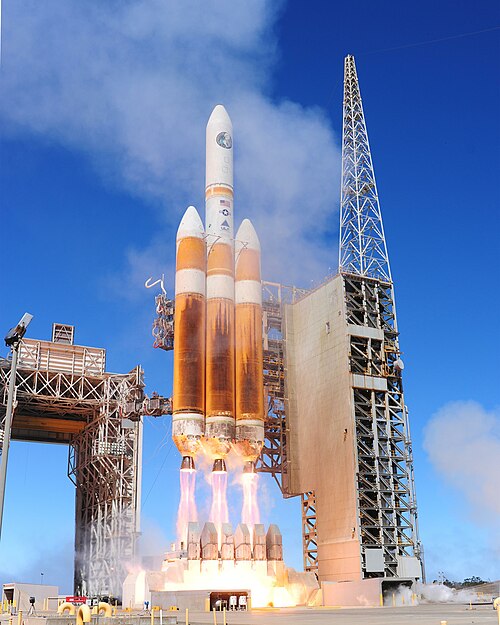
Could a single launch site really support three orbital missions in less than seven days? It appears SpaceX has just proved it can. The first hours of December 10 will find a Falcon 9 rocket launching from Vandenberg Space Force Base in California, the company’s third launch from the site in less than a week. The mission will carry 27 Starlink satellites into low-Earth orbit, continuing the rapid expansion of SpaceX’s broadband constellation.

The launch window opens at 12:54 a.m. and runs to 4:54 a.m. Pacific Time. Live coverage will start some five minutes before liftoff. Following stage separation around eight minutes into flight, the first stage booster will attempt an autonomous landing on a droneship positioned out in the Pacific Ocean. This is part of the ongoing SpaceX effort toward high-frequency reusability-a capability which has already transformed the economics of orbital access.
Landing a rocket booster at sea is nothing short of a marvel of engineering. The first stage of the Falcon 9-a structure 12 stories high, cruising at nearly 8,000 km/h during ascent-must be slowed from hypersonic speeds, re-enter, and execute precise burns to align over the droneship’s deck, 46 by 76 meters in size. Cold gas thrusters serve to adjust its orientation, grid fins for aerodynamic steering, and a final single-engine burn slows the vehicle to near-zero velocity prior to deploying four landing legs. As Elon Musk once described, “A lot less room for error” exists compared to a landing on solid ground, likening the process to “landing a plane on an aircraft carrier vs. a normal runway.”
That’s a technique that has matured, as SpaceX’s track record shows: 545 successful booster landings to date, with some Falcon 9 boosters reflown more than 15 times. Savings of tens of millions of dollars can be had with each reuse, allowing for more launches without proportional increases in cost. It also enables missions like Starlink that require frequent deployments to grow and maintain a network.
Starlink itself is a technological departure from traditional satellite internet systems: instead of a few geostationary satellites orbiting at 22,236 miles, the Starlink constellation operates from low-Earth orbit at about 341 miles of altitude. This configuration reduces latency and improves real-time applications like video calls, online gaming, and high-definition streaming. To date, more than 8,700 satellites already in orbit, but this network has been serving remote and underserved regions all over the world, and with each new batch, its coverage and resilience get stronger.
Vandenberg Space Force Base has been critical in making such a launch cadence possible. Polar and high-inclination orbit missions from its Space Launch Complex 4E are ideal for global coverage satellites like Starlink. For the first time in five decades, Vandenberg reached a historic mark in 2024: 51 launches in one year. This was made possible with operational innovations such as digital integration within range control, optimized crew deployments, and fast reconfigurations of launch infrastructure. Several missions can be processed in short intervals, not at the expense of safety but with pinpoint precision.
The present tempo of SpaceX testifies to how reusable rocket technology is finding synergy with Vandenberg’s modernized launch operations. By marrying boosters capable of repeated flights with a launch site engineered for fast turnaround, it can sustain an unprecedented rhythm of missions. Indeed, this week’s third launch adds to Starlink’s growing fleet while highlighting how engineering and operational efficiency are coming together to redefine what is possible in commercial spaceflight.