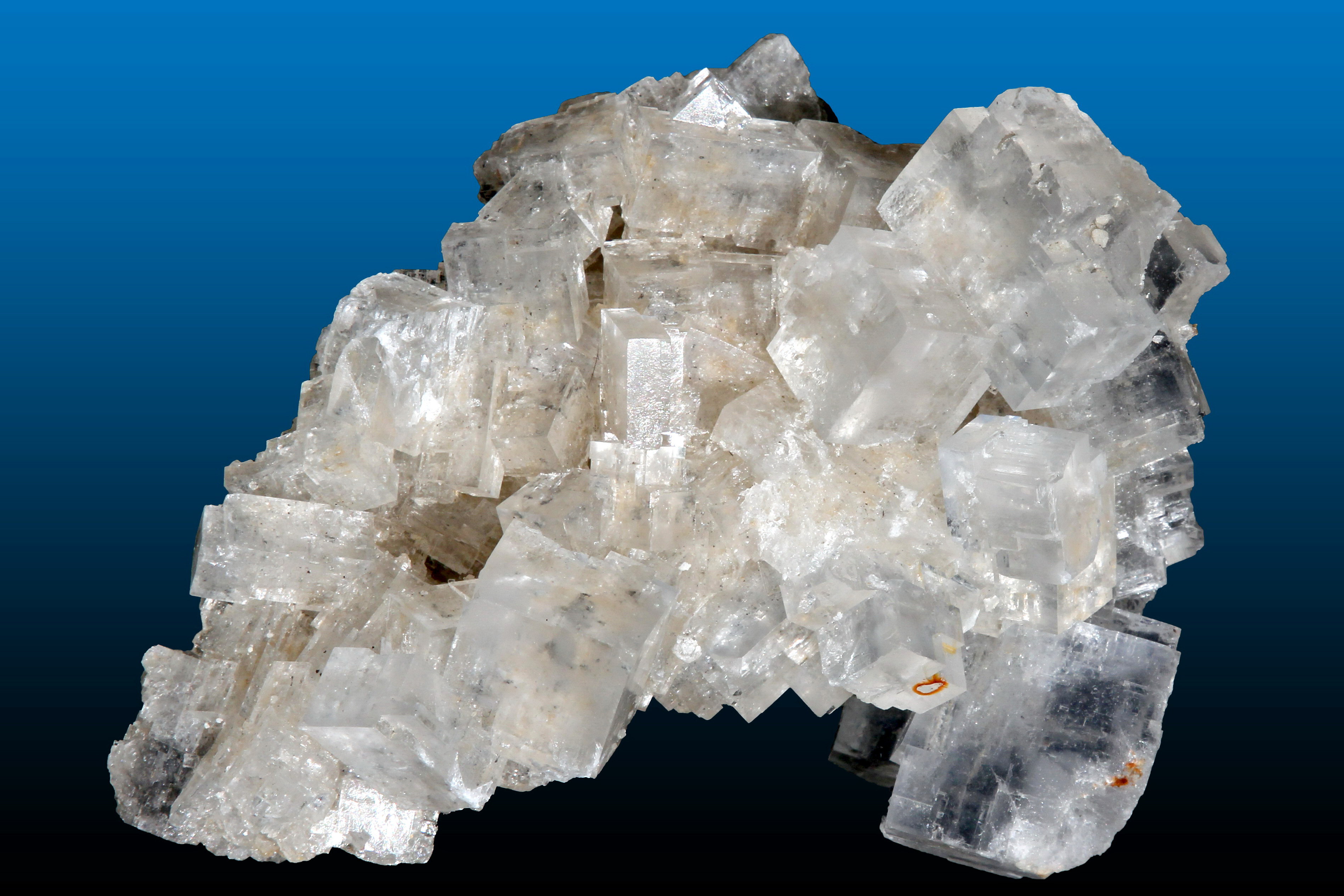
“Our finding answers one big question: did life come first or atmospheric oxygen? It is the latter,” said Professor Uwe Brand. In 2016, a team led by Dr. Nigel Blamey of Brock University cracked open the geological time capsule from Officer Basin in southwest Australia: halite rock that had locked away tiny bubbles of Earth’s atmosphere for an astonishing 815 million years. Those inclusions, preserved since the Neoproterozoic, offered something unprecedented-a direct measurement of ancient air composition, avoiding the uncertainties of indirect geochemical proxies.

Halite, chemically identical to sodium chloride, forms from the evaporation of saline waters into crystalline beds. If conditions are just right in shallow lagoons or saltpan brines, for instance-these crystals can trap microscopic gas bubbles during growth. Preserved from later chemical exchange, they become geological archives of atmospheric history. Officer Basin halite was crushed under vacuum, releasing its fossil gases into a quadrupole mass spectrometer, which is a device that can separate ions by their mass-to-charge ratio with very high precision.
The results were astonishing: levels of oxygen between 10.3 and 13.4 percent of the atmosphere-about half of today’s 20.9 percent-existed long before the Cambrian explosion of complex life, contradicting earlier models that placed significant oxygenation much later. “With this study, the oxygen in the air that allowed the earliest animals to breathe has been measured directly for the first time,” said Professor John Parnell from the University of Aberdeen.
This finding fits into broader geochemical narratives of Earth’s oxygenation. Ancient oxygenic photosynthesizers, cyanobacteria, had evolved hundreds of millions of years before the Great Oxidation Event 2.4 billion years ago. Genome-scale phylogenomic reconstructions suggest that multicellularity in cyanobacteria preceded the GOE and improved the ecological fitness of these organisms for oxygenating oceans. Yet, oxygenation did not happen overnight; high concentrations of nickel and urea might have suppressed the growth of cyanobacteria at first, as recent experimental work suggests.
Preservation of halite in Officer Basin finds analogs in other deep-time archives, such as the 2-billion-year-old Karelia Basin salts recording sulfate levels at least 30% of modern oceans and thus robust oxygen production. In these examples, the tectonic isolation of basins and/or a repeated cycle of evaporation have concentrated the chemical signals of atmospheric change. Such deposits are rare; the solubility of halite means most ancient occurrences have long since dissolved away.
The Blamey team’s quadrupole mass spectrometer method is a first in paleoclimate reconstruction. This direct gas analysis eschews some of the false positives inherent to the chromium isotope systems, which can be skewed through ligand interference. Similar approaches have been done on amber-trapped Miocene air, but halite extends the reach hundreds of millions of years deeper. The inclusions have to be primary, undisturbed since capture, and that calls for painstaking petrographic screening and geochemical cross-checks.
From an engineering viewpoint, the precision required for trace gas detection in minute inclusions places extraordinary demands on vacuum integrity and ion optics stability, and it calls for calibration against modern atmospheric standards. Success of this technique opens possibilities to probe other evaporite deposits worldwide, perhaps mapping oxygen’s fluctuations across critical evolutionary thresholds.
The clear message of Officer Basin halite is that significant oxygenation predated the rise of complex multicellular life. This view reinforces the belief that atmospheric oxygen was not a result of life’s diversification, but it acted as a driver for it, expanding ecological niches and allowing aerobic metabolism to thrive. We’ve come up with a direct method of analyzing the content of those trapped fossil gases in the atmosphere, says Blamey, a method that perhaps might redefine the way scientists read the deep history of Earth’s air.