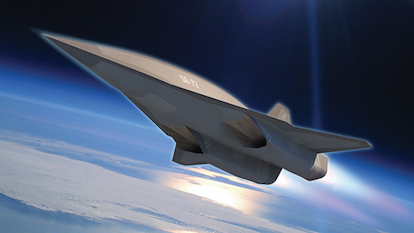
What good is a spy plane that can outrun missiles if it cannot outrun its own engineering bill? The SR-72, often described as the spiritual successor to the SR-71 Blackbird, keeps resurfacing because it speaks to a real strategic itch: the need to reach heavily defended airspace fast, gather intelligence, and leave before defenses can fully react. In concept, the aircraft would push to Mach 6, roughly doubling the speed associated with its famous predecessor. That matters because modern air defense networks have become so layered and far-reaching that traditional assumptions about survivability are under pressure.

The appeal is easy to understand. A reusable aircraft built for intelligence, surveillance, reconnaissance, and possibly strike missions would offer something missiles and satellites cannot fully match: responsiveness. Satellites are predictable in orbit, and one-way weapons are consumed after launch. A hypersonic aircraft could be redirected, recovered, and sent again. Current U.S. and DARPA work on reusable hypersonic strike-recon concepts shows the idea is still alive, with prototype development by 2030 remaining part of the wider discussion.
That is where the SR-72 concept becomes more than nostalgia for the Blackbird era. Its central promise is not stealth in the familiar sense. At hypersonic speed, the aircraft’s skin would endure punishing thermal loads, and that creates design tradeoffs that are hard to hide. Materials able to survive sustained flight beyond Mach 5 are still a major hurdle, with engineers turning to ceramic, carbon, and metal mixes because conventional metallic airframes would struggle in that heat. The propulsion challenge is just as severe. A turbine-based combined-cycle engine has to operate across radically different speed regimes, bridging the awkward gap between turbine performance and scramjet performance. NASA-backed studies and related contracts have focused on exactly that transition problem, including mode-transition research intended to make a practical TBCC system possible. Even now, no publicly confirmed SR-72 flight test has taken place.
There is also an uncomfortable tactical reality: speed may replace stealth, but it does not erase detectability. A vehicle moving at Mach 6 produces so much heat that its infrared signature becomes part of the problem. The aircraft may survive by crossing defended zones too quickly to stop, not by remaining unseen. That changes mission planning, payload design, and even weapons release, since opening a bay and separating stores at hypersonic speed is its own engineering discipline.
The cost question hangs over all of it. Programs built around advanced materials, novel propulsion, and limited production runs have a habit of turning into cautionary tales. The comparison to the Navy’s Zumwalt is not casual rhetoric; the three-ship destroyer program saw costs rise by more than $2 billion over five years as quantities shrank and development burdens concentrated on a tiny fleet. The same structural risk shadows any aircraft that depends on exotic manufacturing, custom engines, and bespoke sensors.
Meanwhile, hypersonics as a broader field is advancing fast. Test infrastructure expanded significantly in 2025, including a $1.45 billion, five-year contract for the Pentagon’s MACH-TB test effort. That surge helps the SR-72 idea indirectly by improving materials work, propulsion research, and flight-test cadence across the sector.
The result is a strange position for the “Son of Blackbird.” It remains strategically attractive, technically plausible in pieces, and still unproven as an operational system. The aircraft sits between two very different futures: a reusable platform that restores fast deep-penetration ISR, or a brilliant engineering artifact that never becomes affordable enough to matter.