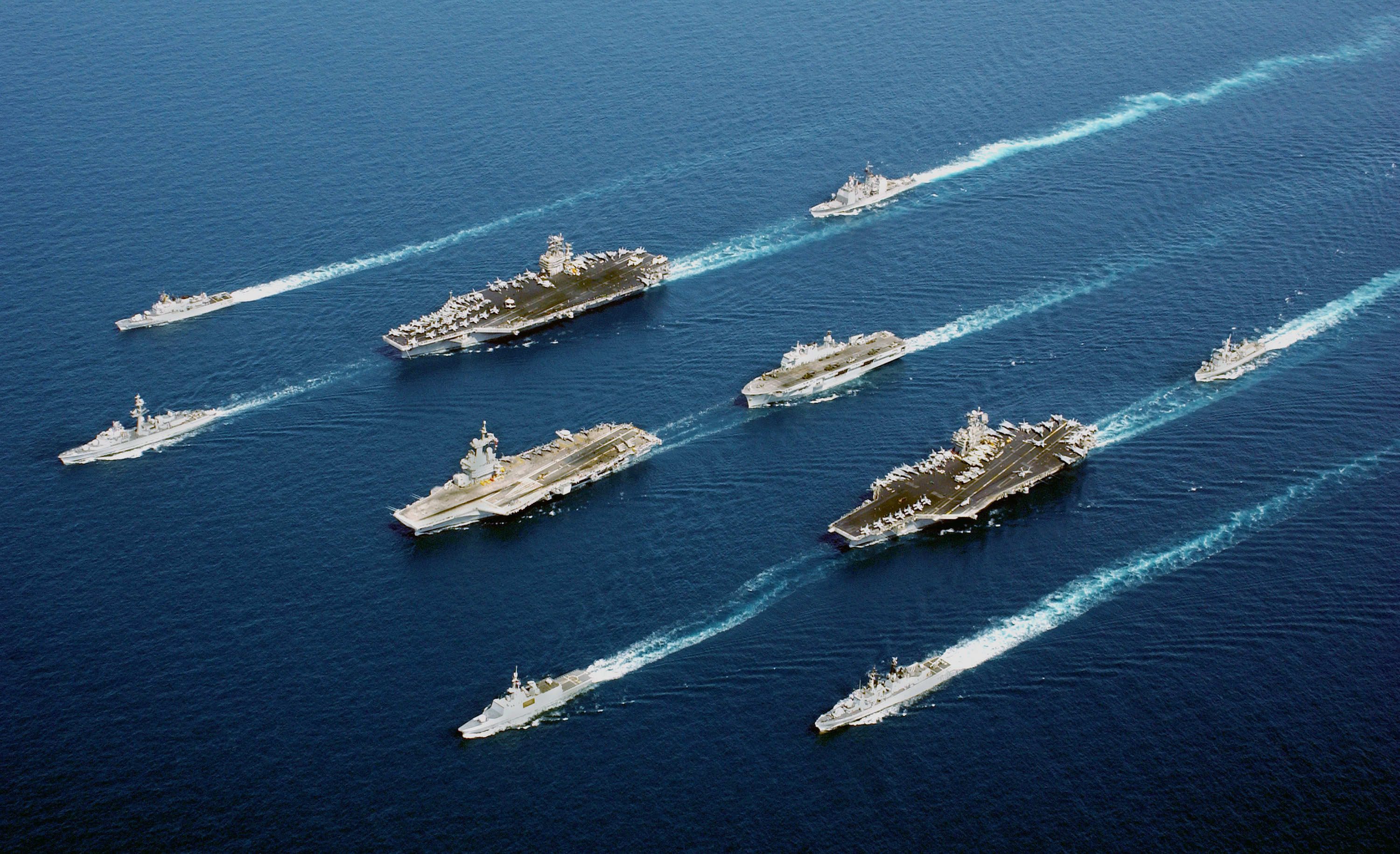
Can a navy stay survivable by making its targets smaller, harder to track, and more numerous? That question sits behind the U.S. Navy’s long shift away from concentrating combat power in a few highly visible formations and toward a force that spreads sensors, missiles, and decision-making across the fleet. The logic is not simply about building less ship. It is about operating in an era when long-range missiles, persistent surveillance, and faster kill chains make large, predictable groupings more vulnerable than they once were.

The Navy’s answer has been a concept now widely associated with distributed lethality and later Distributed Maritime Operations. In practical terms, that means dispersing the fleet while still concentrating effects. A smaller combatant no longer needs to carry every sensor and every weapon if it can function as one node in a larger network. The value shifts from the individual hull to the force architecture around it: offboard targeting, shared data, longer-range missiles, and the ability to maneuver in separated formations without losing striking power. Smaller warships fit that model because they complicate targeting.
A dispersed force asks an opponent to search for more contacts over a wider area, sort decoys from combatants, and allocate weapons against a larger number of nodes. That does not make any one ship invulnerable, but it changes the math. As recent naval analysis has emphasized, modern survivability is no longer just about armor or shock hardening. The Navy’s own framework increasingly treats survivability as a mix of susceptibility, vulnerability, and recoverability. In plain terms, the best hit is still the one that never lands, and a ship that is difficult to detect and track gains an advantage before any missile is launched.
That marks a clear break from older assumptions. For decades, surface combatant design was shaped by the idea that larger ships with stronger built-in protection could absorb punishment and keep fighting. But missile warfare has pushed the argument in a different direction. Modern anti-ship combat places a premium on sensing, networking, and engagement range. A ship’s radar cross-section, emissions control, electronic warfare suite, and access to remote sensors can matter as much as sheer size. Smaller platforms also offer a way to distribute magazines and command functions, reducing the operational penalty if one hull is damaged or forced to withdraw.
The concept has appeared in several forms, including smaller combatants built to blend into cluttered coastal spaces and rely heavily on passive sensing. A Naval Postgraduate School concept for a light missile combatant described a ship designed to be difficult to detect, identify, target, and hit. That language captures the broader engineering trend. Stealth shaping, electronic deception, passive sensors, and unmanned teammates all support the same idea: survival through dispersion and ambiguity rather than concentration and visibility.
There is another reason the Navy keeps moving in this direction. Large formations remain powerful, but they are also easier to surveil and cue against in heavily contested waters. Distributed operations let commanders spread risk, preserve presence across larger areas, and create multiple firing positions instead of one obvious center of gravity. The result is a fleet that aims to be more resilient, not less exposed. Smaller distributed warships are part of that redesign. They are not replacing major combatants outright, but they are redefining how naval power is packaged, hidden, and applied at sea.